Delivery App for Drivers
Hyper-Local Delivery Service
Client
E-commerce
Services
UX/UI
Industries
Consumer Goods
Year
2020
Collaborators
2
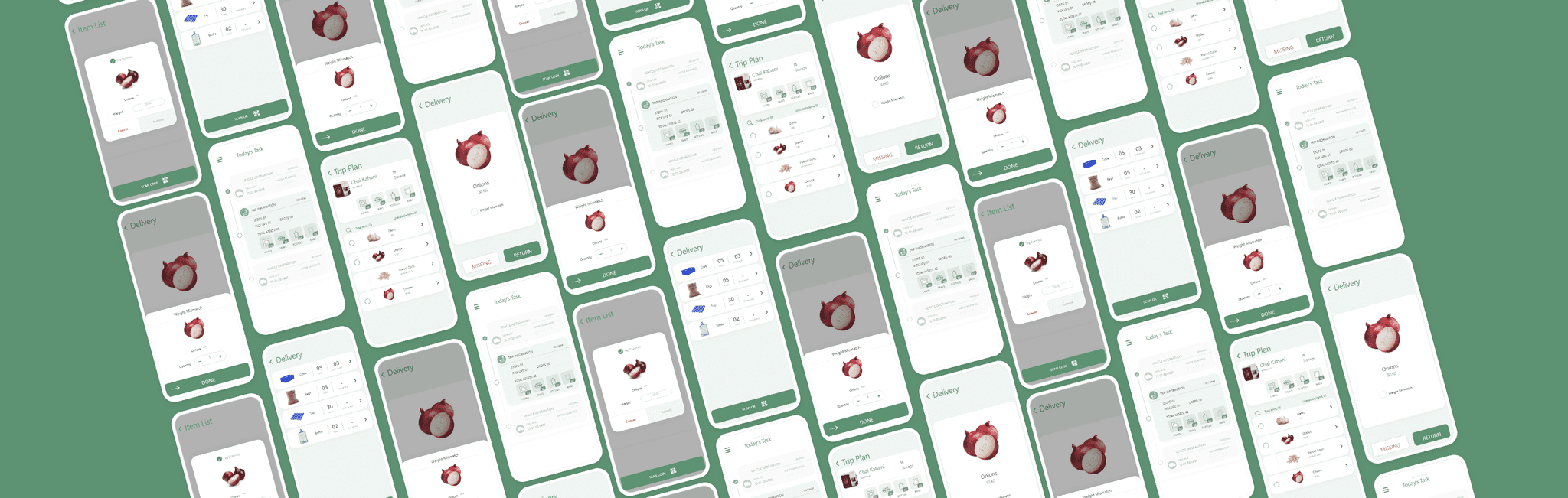
The Farmrevv Driver's App aims to streamline and enhance the delivery and procurement processes for Farmrevv's logistics operations. The key objectives of the app include:
Optimize Routes: Provide drivers with the most efficient routes to minimize travel time and fuel consumption, ensuring timely deliveries and pickups.
Real-time Tracking: Enable real-time tracking of delivery and procurement status for better coordination and transparency.
Simplify Communication: Facilitate seamless communication between drivers, dispatchers, and the main office to resolve issues promptly and enhance operational efficiency.
Automate Tasks: Reduce manual tasks by automating delivery confirmations, inventory updates, and report generation.
Enhance Usability: Design a user-friendly interface that caters to the specific needs and skills of the drivers, ensuring ease of use and minimal training requirements.
Ensure Safety: Incorporate safety features and guidelines to promote safe driving practices and compliance with regulatory requirements.
The primary target audience for the Farmrevv Driver's App includes:
Delivery Truck Drivers:
Responsibilities: Responsible for delivering vegetables and groceries to restaurants and large canteens, as well as procuring supplies from various locations.
Needs: Efficient navigation, real-time updates on delivery and pickup schedules, easy communication with dispatchers, and tools for quick task completion.
Skill Level: Varied technological proficiency, requiring an intuitive and straightforward app interface.
Dispatchers and Logistics Coordinators:
Responsibilities: Overseeing the delivery schedule, managing driver assignments, and ensuring smooth operation of the logistics network.
Needs: Real-time monitoring of delivery statuses, efficient communication with drivers, and tools for coordinating multiple deliveries simultaneously.
User Challenges
Route to the Location: Drivers need assistance in navigating the most efficient route to their delivery or pickup location.
Sequence of Locations: Drivers often lack clarity on the order of locations they need to visit.
Asset Information: Drivers need detailed information about the assets they are carrying and those that need to be recovered.
Delivery/Pickup Acknowledgement: Drivers require a streamlined method for acknowledging deliveries and pickups to avoid discrepancies.
Streamline Delivery Process: Improve the efficiency and coordination of the delivery process.
Delivery/Pickup Acknowledgement: Ensure accurate and timely delivery and pickup acknowledgements to avoid discrepancies.
Reduce Asset Liability: Minimize the risk of asset loss and ensure accurate tracking.
Automate Toll and Invoice Tracking: Eliminate the need for manual tracking of toll fees and invoices to reduce errors and save time.

Design Tasks:
Workflows:
Develop detailed workflows for drivers, from starting their route to completing deliveries and pickups.
Include steps for real-time route optimization, delivery/pickup acknowledgements, and asset management.
Information Architecture:
Structure the app’s information logically to ensure easy access to route details, delivery sequences, and asset information.
Design a clear hierarchy for navigation, delivery schedules, and communication tools.
Wireframes:
Create wireframes for each screen of the app, focusing on simplicity and ease of use.
Include screens for route navigation, delivery/pickup acknowledgements, asset details, and communication.
Visual Design:
Design a visually appealing and user-friendly interface that aligns with Farmrevv’s branding.
Ensure the design is intuitive, with clear icons, readable text, and easy-to-use buttons.
UI Design
Design and Technical Implementation Notes:
Visual Style: The visual style of the app will follow the same guidelines as other internal Farmrevv applications, ensuring consistency across the platform.
Hybrid Application: The app will be a hybrid application, adhering to both Material Design (for Android) and iOS Styleguide principles. This ensures a consistent user experience across different devices.
Platform: While the app follows hybrid design guidelines, it is specifically designed for the Android platform, ensuring it meets the needs of Farmrevv’s primarily Android-based drivers.
Asset Tracking: The app’s asset management features directly address the issue of lost crates by providing accurate tracking, reducing the business's asset liability.
Live Updates: The app will provide live updates to customers on the status of their shipments, reducing the need for them to call operations staff and enhancing customer satisfaction.
1. Vehicle Assignment from Multiple Vehicles to the Driver
Solution: Implement a feature allowing dispatchers to assign specific vehicles to drivers based on the delivery or procurement task. The driver receives a notification within the app about the vehicle assignment, along with details like vehicle type, license plate, and capacity.
Benefit: Ensures that the correct vehicle is used for each task, improving logistics efficiency and reducing the risk of overloading or using the wrong vehicle.
2. Route Guidance for Delivery and Procurement
Solution: Integrate real-time GPS navigation and route optimization features, providing drivers with turn-by-turn directions. The app should also offer alternative routes in case of traffic congestion or roadblocks.
Benefit: Reduces travel time, fuel costs, and delays, ensuring timely deliveries and efficient procurement processes.
3. Procurement Evidence Creation for Collection
Solution: Develop a digital evidence capture system within the app where drivers can upload photos, scan barcodes, or obtain digital signatures during procurement. This evidence is automatically linked to the procurement record.
Benefit: Provides verifiable proof of procurement, reducing disputes, and ensuring accountability. Helps track items collected and minimizes errors.
4. Real-Time Produce Availability Feedback
Solution: Implement a real-time feedback mechanism within the app, allowing drivers to report on the availability of produce directly from procurement sites. This data can be instantly shared with the operations team to make alternate plans if needed.
Benefit: Helps avoid delays caused by unavailable produce and enables quick decision-making to redirect resources, ensuring continuous supply chain operations.
5. Delivery with Asset Information
Solution: Display detailed asset information on the delivery screen, including the number of items, their quantities, and the assets (e.g., crates, bags) required for delivery. The app should allow drivers to check off each item as it is delivered.
Benefit: Reduces confusion during delivery, minimizes the risk of missing items, and helps ensure all assets are accounted for, addressing the issue of lost crates.
6. Enabling Delivery Person to Add Missing Items
Solution: Add a feature that allows drivers to manually input any missing items during delivery. This information is immediately updated in the system and communicated to the operations team.
Benefit: Ensures that any discrepancies are noted and addressed in real-time, reducing the risk of incomplete deliveries and improving customer satisfaction.
7. Ability to Track Quantity Mismatch of Items Delivered
Solution: Include a feature for drivers to report quantity mismatches between the expected and actual delivery. The app should prompt the driver to confirm the mismatch and automatically update the delivery record.
Benefit: Helps in maintaining accurate inventory records, reduces discrepancies, and provides clear documentation for resolving any disputes.
8. Ability to Add Returned Items from Customers
Solution: Provide an option for drivers to record any items returned by customers during delivery. This could include scanning the returned items or selecting them from the delivery list.
Benefit: Keeps the inventory system updated, allows for better stock management, and ensures that returns are accounted for properly, reducing financial losses.
9. Ability to Add Missing Assets from Previous Delivery
Solution: Implement a feature where drivers can record any missing assets (e.g., crates, trays) from a previous delivery during a new delivery. This information should be tied back to the original delivery record.
Benefit: Assists in tracking and recovering lost assets, reducing the loss of crates and other delivery items, which has been a significant issue for the business.
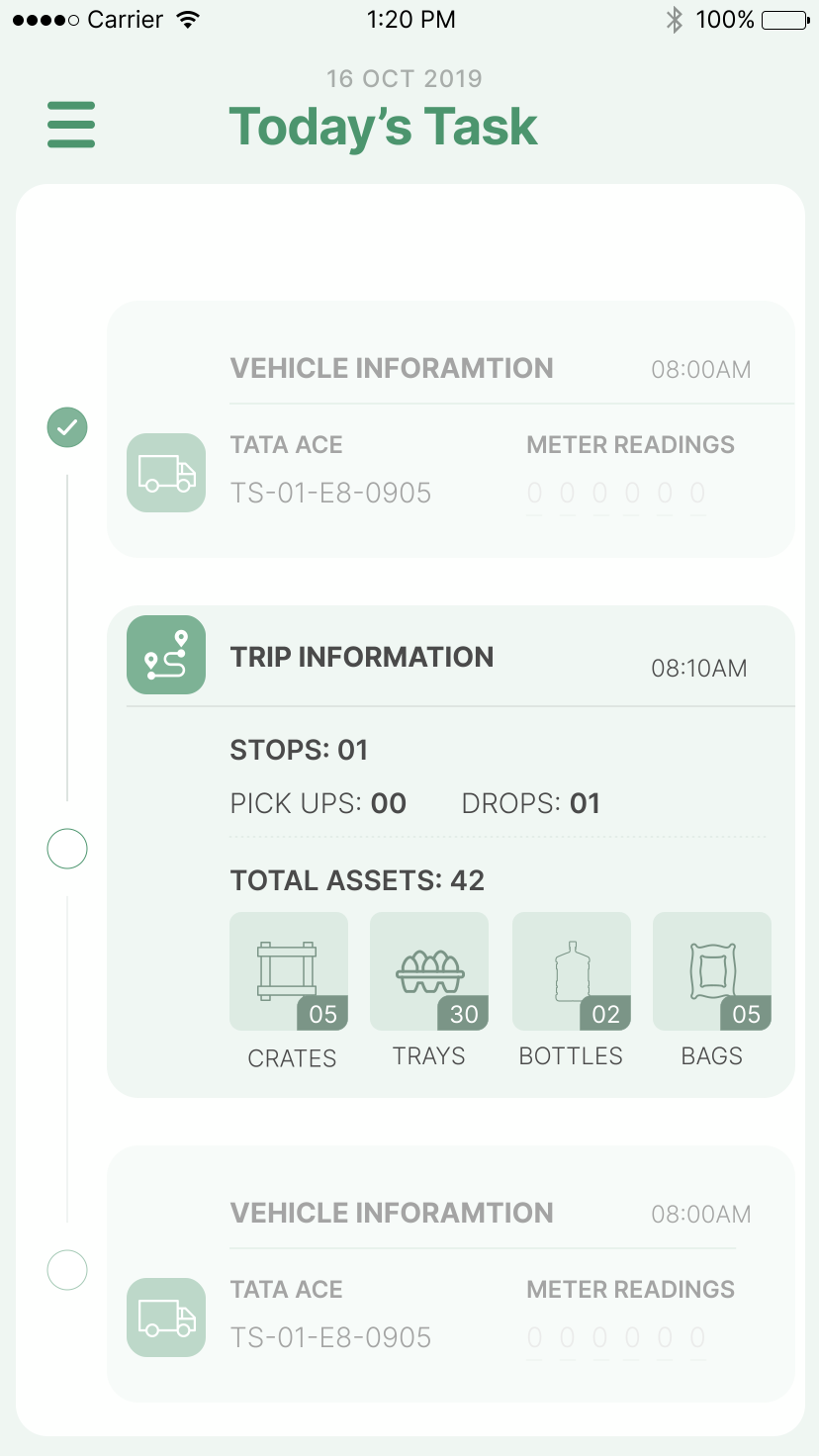
Driver's task for the day
Ensures that the correct vehicle is used for each task, improving logistics efficiency and reducing the risk of overloading or using the wrong vehicle.

Location guidance
Reduces travel time, fuel costs, and delays, ensuring timely deliveries and efficient procurement processes.
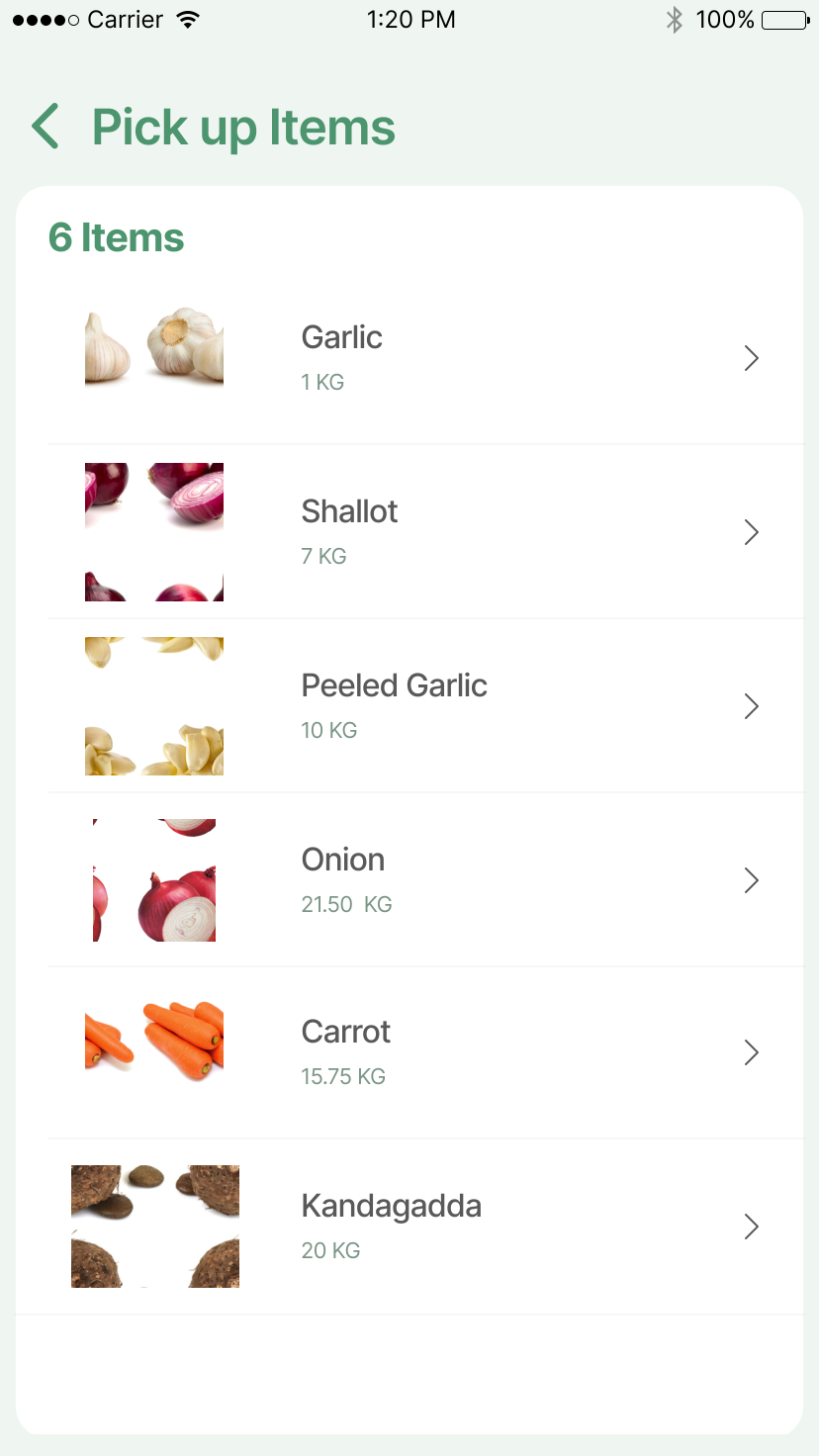
Procurement List
Provides verifiable proof of procurement, reducing disputes, and ensuring accountability. Helps track items collected and minimizes errors.

Delivery Asset info
Reduces confusion during delivery, minimizes the risk of missing items, and helps ensure all assets are accounted for, addressing the issue of lost crates.

Adding Missing Item
Ensures that any discrepancies are noted and addressed in real-time, reducing the risk of incomplete deliveries and improving customer satisfaction.

Delivered Quant mismatch
Helps in maintaining accurate inventory records, reduces discrepancies, and provides clear documentation for resolving any disputes.
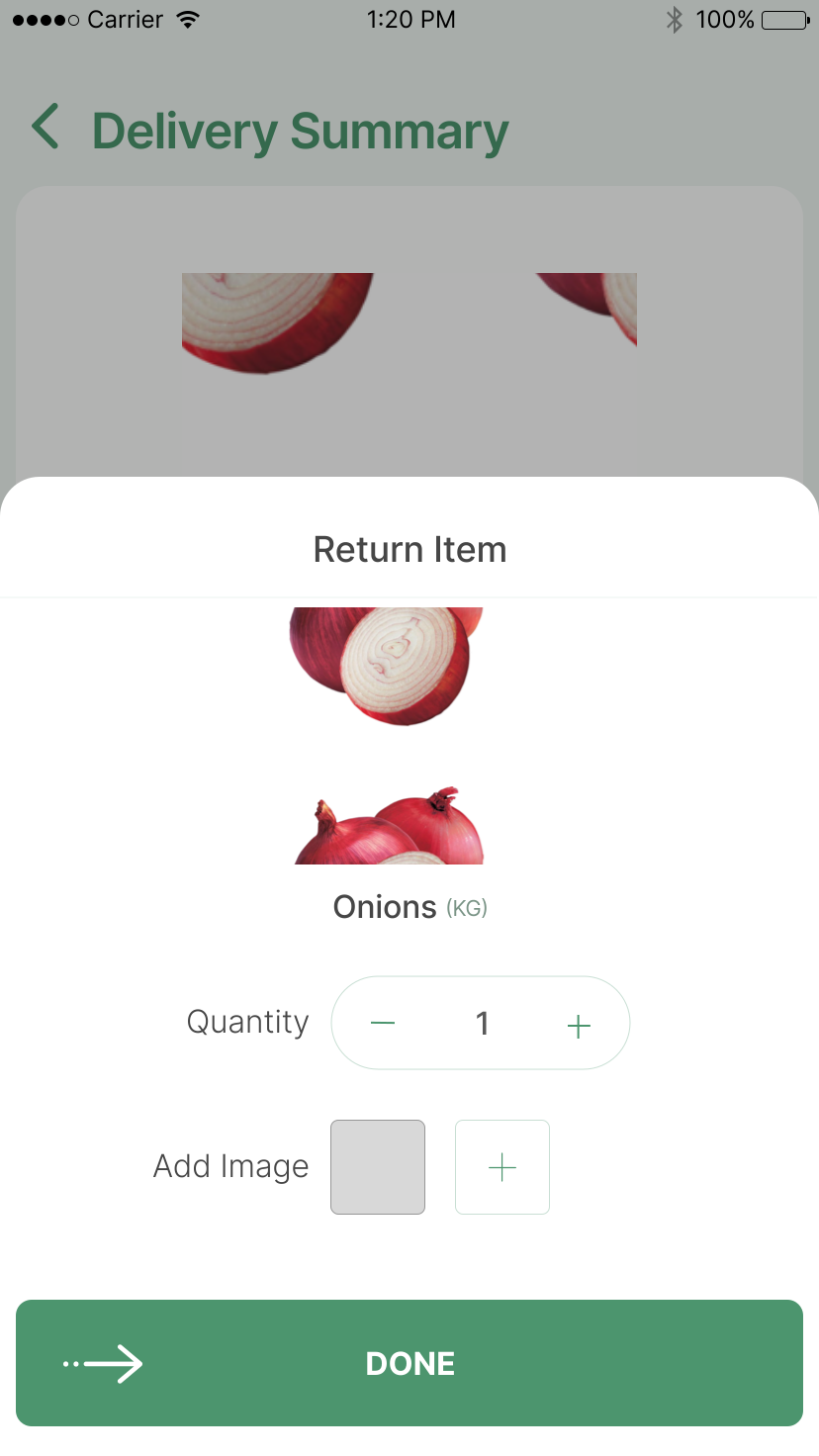
Return Item
Helps in maintaining accurate inventory records, reduces discrepancies, and provides clear documentation for resolving any disputes.

Asset Collection
Assists in tracking and recovering lost assets, reducing the loss of crates and other delivery items, which has been a significant issue for the business.

Procur..item availability
Helps avoid delays caused by unavailable produce and enables quick decision-making to redirect resources, ensuring continuous supply chain operations.
Client Project 2024
India
All designs and concepts presented are provided under the assumption that the client's NDA and IP
policies have been reviewed and are adhered to throughout the project.