Training AI models &
Hepling Automate Indian Port Operations
Client
ATAI
Services
UX/UI
Industries
Maritime
Year
2021-2022
Collaborators
4
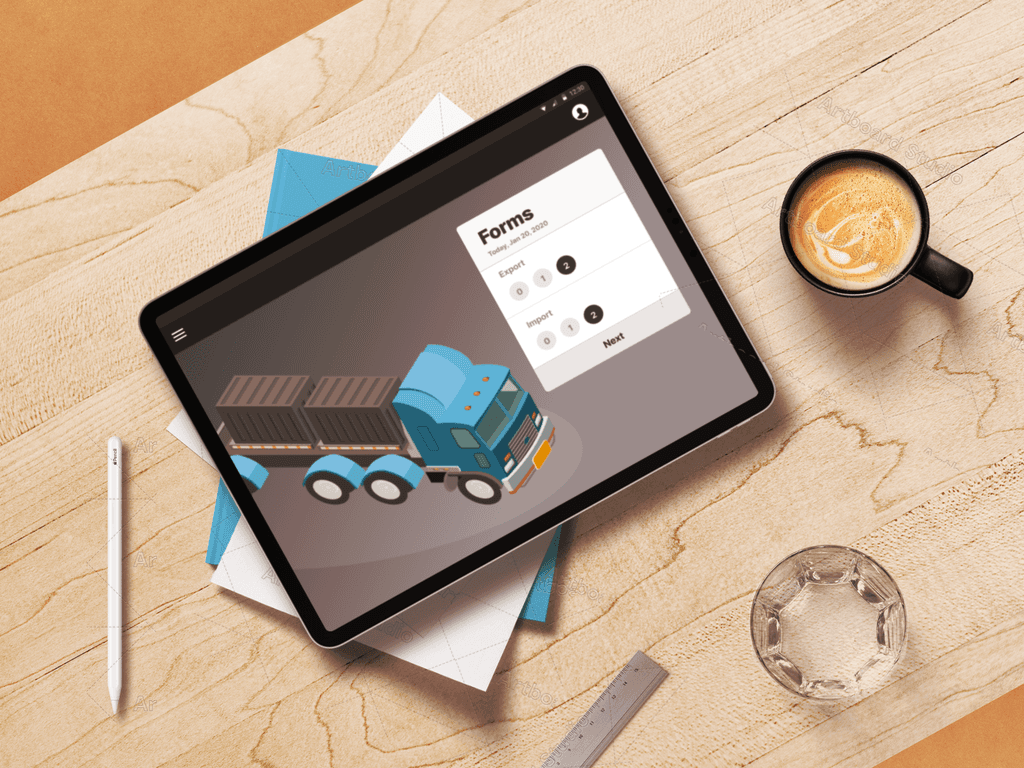


We created a Survey Module within the Terminal Operating System (TOS) for a prominent port in Southern India and are main objectives were:
Reduce information redundancy in container survey processes.
Establish a solid proof creation system.
Decrease time per survey operation.
Optimize human capital utilization per gate.
The target audience for the Survey Module includes personnel responsible for surveying containers at entry and exit gates within the port. This encompasses a diverse group of individuals involved in container logistics, ranging from port staff to logistics operators.
The design approach for the Survey Module revolves around comprehensive research, process mapping, and iterative development. It entails:
Research: Conducting in-depth research to understand the port's operations and challenges faced by surveyors.
Process Mapping: Mapping out container movement processes within the port, identifying inefficiencies, and pinpointing areas for improvement.
Delta Analysis: Identifying gaps between current processes and ideal operational standards set by port management.
Phase-wise Solution: Proposing a phased implementation strategy tailored to each geographical location within the port, ensuring seamless integration and minimal disruption to ongoing operations.
Concept Modeling: Overseeing the conceptualization of design elements in collaboration with animators, ensuring alignment with user needs and operational requirements.
Tab-based Solution: Designing an intuitive tab-based interface for surveyors to streamline data collection, minimize errors, and enhance user experience.
Development Supervision: Overseeing the development process with a focus on maintaining design integrity, functionality, and scalability. Collaborating closely with developers to address any technical challenges and ensure timely delivery.
During the project's discovery phase, I conducted user interviews utilizing a blend of contextual inquiry and shadowing techniques.
Methodology: Employed a mix of contextual inquiry and shadowing (fly-on-the-wall) approaches.
Participants: Engaged with 9 different roles, including stakeholders and users, addressing 18 thematic areas covering geographical locations and user types within the port.
Key Insights:
Current survey methods are vulnerable due to disorganization and lack of sequence.
Scalability is hindered by disjointed processes despite maximizing resource usage.
Port lacks adequate support for drivers and visitors, leading to time inefficiencies.
Disparate software systems operate independently with limited communication.
Surveyors, with an average education level of 8 standard, respond better to visual aids than textual instructions.
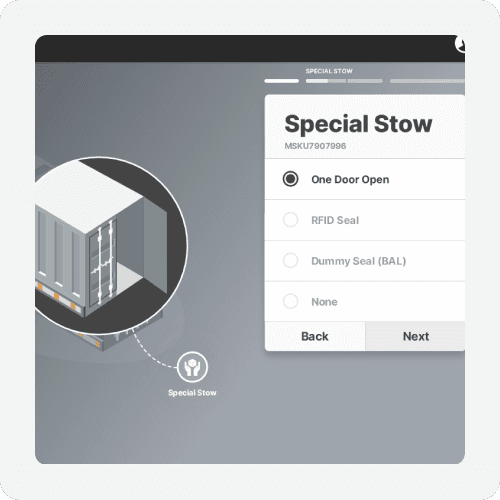
Design Decision: Emphasized real-life objects in design to aid user comprehension and information assimilation.
This concise research underscores critical issues in the survey process, highlighting the need for streamlined, scalable solutions to enhance efficiency and user experience within the port environment.
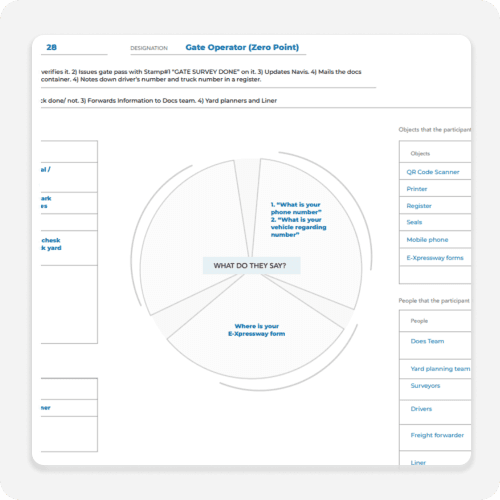
Info: Identified 10 stakeholders involved in container transit.
Stakeholders:
Driver (2*20ft/140ft container carrier)
Security (validates driver and vehicle documents)
Surveyor (conducts container info and health survey)
Gate Operator (generates gate pass)
Docs Team (coordinates with consigner for container movement)
RFID Operator (provides RFID tag to driver for gate-in)
Terminal Gate Operator (validates and generates internal vehicle gate pass)
Yard Operator (assigns storage location for container)
Overview:
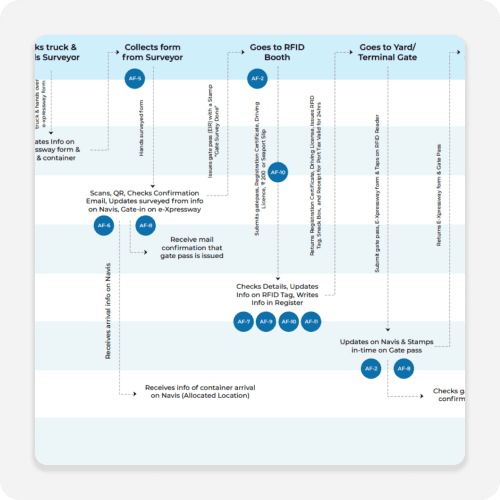
Identified 21 scenarios for container entry and exit at the port.
Used journey mapping for a comprehensive view of each scenario, including checkpoints, stakeholders, and their interactions.
Process:
Determined scenarios by interviewing stakeholders involved with containers, clarifying their roles and responsibilities.
Identified redundancy in some steps, later attributed to poorly resourced SOPs.
This approach aimed to simplify user journeys, aligning processes with key goals for improved efficiency.
Once usability was addressed, I designed the final screens in Figma.
Guiding Questions:
Visual Style: Light and fresh.
Inspiration: Real-world objects.
Platforms: Web.
Pride: Successfully mimicking real-world objects in the UI design.
Disclaimer: The video is only directed by me and animated by a different person.
Client project 2021-2022
Hyderabad
All designs and concepts presented are provided under the assumption that the client's NDA and IP
policies have been reviewed and are adhered to throughout the project.